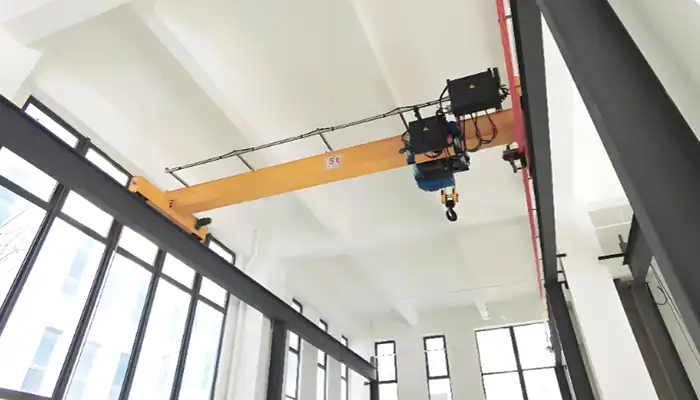
Overhead Crane Steel Structure Design in Kazakhstan Workshops
menu_open
Content Quick Link
Most Important Takeaway
For Kazakhstan industrial business owners, engineers, and workshop decision-makers, the real success of an overhead crane project is not only the crane purchase—it is whether the workshop steel structure can reliably carry the load year after year in real working conditions.
In many Kazakh industrial cities like Almaty, Karaganda, and Pavlodar, experienced plant managers often say a simple truth: “A strong crane in a weak building still becomes a problem.” That is why structural design is treated as a long-term investment, not a construction detail.
What Matters for Kazakhstan Buyers
- How local workshop conditions in Kazakhstan affect crane runway beam performance
- Why trusted engineering design is as important as crane quality itself
- How to correctly calculate crane loads for steel mills, fabrication shops, and mining workshops
- Why many real operational issues come from building structure, not the crane
- Common mistakes seen in Kazakhstan workshop construction projects
- Why integrated crane + structure design is preferred in serious industrial investments
Questions This Guide Solves
How should crane runway beams be designed for overhead cranes in Kazakhstan workshops?
In Kazakhstan industrial projects—whether it is a steel workshop in Karaganda, a fabrication facility in Pavlodar, or a mining support base near central industrial zones—crane decisions are rarely only about equipment. They are about whether the workshop structure can support long-term, continuous production without constant correction work.
In practice, runway beams in Kazakhstan are designed based on real production load, not just catalog crane capacity. Check more on overhead crane with freestanding crane design!
Key considerations include:
- Actual crane working duty in daily operation (not only rated capacity)
- Wheel load distribution across long workshop spans
- Structural stiffness needed to maintain rail alignment
- Temperature effects from long seasonal changes in Kazakhstan
In many industrial sites, engineers focus on stability over time. A common site understanding is simple: if the beam moves too much, the crane will never feel stable, no matter how good the crane is.
What structural risks should be checked before installing a crane in an existing factory building?
In Kazakhstan retrofit projects, this is one of the most important steps before installation starts.
Typical risks include:
- Columns not designed for dynamic crane loads
- Runway beams added later without full structural integration
- Weak joints between beam and support structure
- Uneven load transfer to foundation
Experienced engineers usually inspect the building first, because once the crane is installed, correcting structural issues becomes more difficult and costly.
How do temperature changes across Kazakhstan affect steel workshop structures?
Kazakhstan has strong seasonal temperature differences, especially between winter and summer. This is not just environmental information—it directly affects steel behavior.
In industrial workshop conditions:
- Steel expands in summer and contracts in winter
- Welded joints experience repeated stress cycles
- Long runway systems gradually shift in alignment
- Small changes accumulate over time into maintenance issues
That is why expansion behavior is always considered in serious industrial crane workshop design.
What column spacing works best for practical industrial production layouts?
In Kazakhstan workshops, column spacing is not fixed by rule—it is decided by production logic.
Most commonly, spacing is adjusted within a practical range of:
- Around 6–12 meters depending on workshop size and crane span
But what really matters is:
- Material flow inside the workshop
- Position of machines and workstations
- Crane travel path and lifting zones
- Future expansion possibilities
In many factories, flexibility is preferred because production requirements often change over time.
Why do crane systems start showing problems even when imported from reliable manufacturers?
This is a very common situation in Kazakhstan industrial projects. The crane itself may be high quality, but operational issues still appear.
The reason is usually not the crane:
- Structural mismatch between crane and workshop
- Runway beam deflection or misalignment
- Column spacing not aligned with crane travel behavior
- Installation conditions different from design assumptions
In simple workshop terms often heard on site: "The crane is fine, but the building is not working with it."
How do experienced plant engineers in Kazakhstan prevent long-term maintenance issues?
Experienced engineers usually focus on early-stage planning rather than later correction.
Their approach typically includes:
- Checking structure before crane selection is finalized
- Matching crane load with real workshop conditions
- Ensuring precise alignment during installation
- Considering seasonal temperature effects in design stage
The main idea is practical: solve alignment and load issues early, so maintenance does not become a constant routine later.
When is it better to redesign the workshop structure instead of only upgrading the crane?
In Kazakhstan industrial practice, upgrading only the crane is not always enough.
Structure redesign becomes necessary when:
- Existing beams cannot safely handle increased crane capacity
- Frequent alignment or vibration issues appear
- Column strength limits future production expansion
- Retrofit reinforcement becomes too frequent or costly
In many cases, engineers conclude that improving the structure first creates a more stable foundation for any future crane upgrade.
A common practical view in industry is: "If the building cannot carry the future load, upgrading the crane alone will not solve the problem."
Introduction: In Kazakhstan Industry, Structure Is the "Silent Foundation"
In Kazakhstan industrial regions—Karaganda, Pavlodar, Almaty industrial zones, and mining-related workshop areas—overhead cranes are part of daily production life. The crane is always visible. It moves, it works, it carries load.
Crane capacity is easy to talk about, structure is what keeps it running
In Kazakhstan workshop projects, buyers often start with crane capacity—5 ton, 10 ton, sometimes 20 ton overhead crane systems for steel production or maintenance workshops. That is normal. It is the first technical step in any project discussion.
But in actual operation, the situation is different.
- Cranes run daily across long workshop spans
- Heavy lifting is repeated in continuous shifts
- Temperature changes between winter and summer are strong
- Some workshops operate 24-hour cycles in mining and steel sectors
Under these conditions, the steel structure is doing the hidden work.
Or as many local technicians say in a simple way: "The crane moves, but the building carries it."
It is not a theory. It is what operators see after years of use.
Many Kazakhstan workshops were not built for modern crane loads
A large number of industrial buildings in Kazakhstan were constructed during Soviet industrial periods or early post-independence expansion. At that time, cranes were lighter, production intensity was different, and structural standards were not always aligned with today's continuous heavy-duty operation.
Now the situation has changed.
- Older workshops are upgraded for higher capacity cranes
- 10 ton and 20 ton crane systems are added into existing buildings
- Steel mills and fabrication shops run more intensive cycles
- Retrofit installation is more common than new construction
This creates a very practical challenge: the structure may look solid, but it was not designed for today's load behavior.
In some workshops, engineers describe it in a straightforward way: "The crane is new, but the building is from another time."
What is commonly seen in real Kazakhstan workshop operation
Structural issues do not appear suddenly. They develop slowly during operation. In Kazakhstan industrial environments, especially where cranes run frequently in steel or mining support workshops, the early signs are usually small.
You may notice:
- Rails needing alignment more often than expected
- Slight crane deviation during long travel distances
- Uneven wheel wear on end carriages
- Small vibration when lifting heavier loads
- Maintenance teams making frequent minor adjustments
At first, these are treated as normal workshop behavior. Nothing stops production, so it is easy to ignore.
But with time, especially under seasonal temperature changes in Kazakhstan, these small signs become more visible.
Why experienced Kazakhstan engineers check structure first
In many industrial projects across Kazakhstan, experienced engineers do not start with the crane only. They first check the workshop condition.
They usually focus on practical points:
- Whether runway beams were properly designed or added later during retrofit
- Whether column spacing matches real production layout
- Whether the structure can handle future crane capacity increase
- Whether steel connections are strong enough for repeated load cycles
This is not about strict theory. It is about avoiding repeated repair work after installation.
One common remark from site engineers is very direct: "It is better to check the building once, than fix the crane many times."
Why structure matters more in Kazakhstan working conditions
Kazakhstan has a specific industrial environment. Temperature differences between winter and summer are wide. Many workshops are exposed to cold climate conditions for long periods. At the same time, industries like mining and steel production require continuous crane operation.
These conditions affect structure behavior in a practical way:
- Steel expands and contracts across seasons
- Welded joints experience repeated stress cycles
- Long-span beams carry continuous dynamic loads
- Small misalignment becomes more visible over time
So the structure is not only supporting weight. It is adapting to environment and load at the same time.
That is why runway beam design, column alignment, and load distribution are treated as core engineering tasks in Kazakhstan crane workshop projects.
A simple understanding shared on site
On many Kazakhstan workshop sites, the explanation is often not complicated. It is said in a very practical tone:
"If the structure is right, the crane runs quietly. If it is not, you will always hear it."
It reflects daily experience more than design theory.
Why this section matters for long-term crane use
Overhead cranes in Kazakhstan are not short-term equipment. They are part of production systems in steel plants, fabrication workshops, and mining support facilities.
That is why structural design directly affects:
- Stability during daily lifting operations
- Maintenance frequency over years of use
- Possibility of upgrading from 5 ton to 10 ton or 20 ton cranes
- Safety and smoothness of workshop workflow
When the structure is properly designed, crane operation becomes predictable. When it is not, even a good crane will require constant attention.
Runway Beam Design in Kazakhstan Workshop Conditions
In Kazakhstan industrial workshops—whether in Karaganda steel production zones, Pavlodar fabrication plants, or mining service workshops near central industrial corridors—the runway beam is not just a structural element on paper. It is the part that directly decides whether the overhead crane runs smoothly day after day, or slowly starts creating operational issues that maintenance teams have to chase.
The Role of Runway Beams in Real Industrial Use
The runway beam is where engineering design meets daily production reality. It carries the crane movement along the entire workshop span, quietly taking load every time the crane travels, lifts, or stops.
In Kazakhstan workshops, this is not occasional use. It is continuous.
Runway beams typically handle:
- Heavy cyclic loading from steel coils, machine parts, and fabricated structures
- Long travel distances across wide industrial bays common in steel and mining workshops
- Strong seasonal temperature differences, especially between winter frost and summer heat
- Occasional overload situations during peak production or urgent lifting tasks
These conditions are very practical, not theoretical. That is why many local engineers prefer straightforward design logic instead of overcomplicated assumptions.
In workshop discussions, you may often hear a simple comment like: "We design for how it will actually be used, not how it looks on drawings."
That mindset shapes how runway beams are treated in Kazakhstan industrial projects.
Practical Design Considerations Used in Kazakhstan Projects
A reliable runway beam design in Kazakhstan is usually based on real working conditions, not just nominal crane specifications.
Key design considerations include:
- Actual crane capacity used in production, not only theoretical maximum load
- Workshop span, bay spacing, and available steel structure layout
- Steel grade selection that performs well under low-temperature conditions
- Wheel load distribution during movement, acceleration, and braking
- Long-term deflection control to maintain rail alignment stability
In industrial regions like Karaganda and Pavlodar, where steel and fabrication industries operate under continuous cycles, engineers often prefer more rigid structural forms.
That is why reinforced H-beams and welded box girders are commonly used. They provide better stiffness under repeated loading and reduce long-term alignment issues.
It is not about making the structure heavier. It is about keeping the crane movement stable over years of use.
Temperature Reality in Kazakhstan
One of the most important local factors in Kazakhstan is temperature variation across seasons. It is not small. In winter, conditions can be extremely cold. In summer, steel structures expand under heat.
This movement is gradual, but it affects crane runway systems over time.
What typically happens in real workshop operation:
- Rails slowly shift out of ideal alignment
- Welded joints experience repeated stress cycles
- Beam connections begin to loosen or fatigue
- Small deviations appear in crane travel path
These changes do not happen in a single day. They develop slowly, which is why they are often noticed only during maintenance checks.
Because of this, experienced Kazakhstan engineers always include expansion behavior in structural planning. Not as an extra option, but as a basic requirement.
In practical terms, it means:
- Allowing controlled expansion in long runway systems
- Designing joints that can absorb movement without damage
- Ensuring alignment can be maintained after seasonal changes
As many site engineers put it in simple terms: "Steel moves with the weather. The design has to move with it too."
Column Spacing and Load Calculation in Kazakhstan Workshops
In Kazakhstan industrial workshops—especially in steel plants, mining service bases, and heavy fabrication facilities—the layout of columns and the way loads are calculated are not treated as "pure design work." They are closely tied to how production actually runs on the floor.
Column Spacing Based on Practical Workshop Layout
In Kazakhstan workshop construction, column spacing is rarely decided only by architectural preference. It is usually decided by how the workshop will actually operate every day.
Typical spacing is around 6–12 meters, but in practice it is adjusted case by case depending on real conditions.
Key factors that influence column spacing:
- Material flow inside the workshop and how steel or parts move between stations
- Crane span and lifting route, especially for 5 ton, 10 ton, or 20 ton overhead crane systems
- Position of heavy machines such as cutting, welding, or assembly equipment
- Space reserved for future production expansion or equipment upgrades
In many established factories in Kazakhstan, experienced managers avoid overly rigid layouts. They prefer flexible structural planning because production requirements often change after a few years.
A common practical view is: "Today's layout is not always tomorrow's layout." That thinking directly affects how column spacing is planned.
Load Calculation in Real Industrial Practice
In Kazakhstan industrial engineering work, load calculation is not only about formulas or software output. It is about understanding how cranes and structures behave under real working conditions inside workshops.
Engineers typically consider:
- Maximum crane lifting load during peak production periods
- Wheel load distribution transmitted through runway beams to columns
- Horizontal forces caused by braking, acceleration, and crane skewing
- Snow load, especially in northern and central Kazakhstan regions
- Wind load in open or semi-open industrial buildings
- Seismic conditions depending on specific location and geological zone
Each of these factors affects how the structure performs over time, not just during design approval.
In many practical engineering discussions in Kazakhstan, a simple working principle is often mentioned: "We design not for ideal operation, but for real operation."
This approach reflects how industrial workshops actually function—often under varying loads, shifting production schedules, and continuous crane usage.
Why Dynamic Load Matters in Daily Operation
In mining workshops, steel fabrication plants, and heavy manufacturing facilities across Kazakhstan, overhead cranes often operate throughout the day with repeated lifting cycles.
This creates what engineers call continuous dynamic loading.
Over time, this leads to:
- Gradual fatigue in runway beams and structural connections
- Small but progressive rail misalignment along crane travel paths
- Uneven crane movement during long-distance operation
- Increased wear on wheels and end carriages
These issues usually do not appear suddenly. They develop slowly, especially when production is continuous and maintenance intervals are extended.
That is why dynamic load consideration is not optional in Kazakhstan workshop design. It directly affects how long the structure can maintain stable crane operation without frequent correction.
In practical workshop terms, when dynamic effects are ignored, the structure may still stand—but it will require constant adjustment to keep production running smoothly.
Common Structural Issues Seen in Kazakhstan Workshops
In Kazakhstan industrial practice—whether in Karaganda steel workshops, Pavlodar fabrication plants, or mining service facilities near central industrial zones—people don't usually talk about "theory problems." They talk about what happens after installation, when the crane starts running every day and production cannot stop. And in many cases, the story is similar: the crane is fine, but the structure starts showing stress after some time. Local engineers often put it in a straightforward way: "Equipment can be replaced. The building stays." That is exactly why structural issues deserve attention from the beginning.
Buildings Not Originally Designed for Cranes
A large portion of workshop buildings in Kazakhstan were built in earlier industrial periods, when production needs were different and crane usage was lighter or less continuous. Many of these structures were originally designed more for roof support than for repeated crane wheel loads.
When modern 5 ton, 10 ton, or 20 ton overhead cranes are added later, the mismatch becomes visible.
Common situations include:
- Runway beams that were not originally calculated for modern wheel loads
- Columns that work for static building loads but struggle with dynamic crane forces
- Need for reinforcement before safe crane operation can continue
In retrofit projects, experienced engineers usually do not rush. First step is always structural verification. Because once production starts, any weak point becomes difficult to fix without interruption.
In Kazakhstan workshops, people often say it simply: "Before installing the crane, make sure the building is ready to carry it every day."
Misalignment During Construction or Retrofit
In real workshop installation work across Kazakhstan, alignment is one of the most sensitive points. Even small deviations during column placement or runway beam installation can lead to long-term operational issues.
What often appears later is not dramatic, but continuous:
- Crane slightly drifting during long travel
- Wheels wearing unevenly on one side
- Operators slowing down movement to reduce vibration
- More frequent adjustment work from maintenance teams
These are not immediate failures, so they are sometimes accepted as "normal workshop behavior." But experienced installers know this pattern.
In practice, many site teams emphasize one principle: measure carefully now, or adjust repeatedly later.
That attitude is common in Kazakhstan industrial projects where reliability is valued more than speed during installation.
Weak Connection Details
In workshop structures, the connection between runway beams and columns is often where small design or construction decisions make a long-term difference.
If these connections are not properly detailed or executed, the result is usually not sudden failure, but gradual operational discomfort.
Typical issues include:
- Welding that is visually acceptable but lacks long-term strength under vibration
- Missing stiffeners or reinforcement plates at key load points
- Bolted connections loosening after repeated crane cycles
- Local deformation around support zones over time
In Kazakhstan industrial environments, where cranes often operate continuously in steel or mining-related production, these small weaknesses slowly turn into repeated maintenance work.
Many engineers describe it in practical terms: "It does not break, but it never feels stable."
Ignoring Local Climate Stress
Kazakhstan's climate is not something that can be treated as background information. It is part of daily structural behavior.
Across regions like northern Kazakhstan or open industrial zones, temperature changes between seasons are large enough to affect steel movement over time.
In workshop operation, this can lead to:
- Expansion and contraction of runway systems across seasons
- Stress concentration at fixed connection points
- Gradual rail alignment changes after winter cycles
- Increased fatigue on welded joints in long-span beams
This is why experienced engineers in Kazakhstan do not treat climate adaptation as an optional detail. It is included from the beginning of structural planning.
In simple workshop language, people often say: "Steel doesn't stay the same from winter to summer, so the structure cannot be treated as fixed either."
No Plan for Future Expansion
In many Kazakhstan workshops, initial crane installation is based on current production needs. A 5 ton or 10 ton overhead crane is installed, production starts, and everything works well at the beginning.
But industrial reality changes.
- Orders increase
- Product size changes
- New production lines are added
- Higher capacity cranes are needed later
If the structure was not planned with future expansion in mind, upgrades become complicated. It may require reinforcement work, partial shutdown, or even redesign of runway systems.
In many real projects, this is where costs increase—not because the crane is wrong, but because the structure was not prepared for growth.
Experienced plant managers often put it simply: "It is cheaper to plan once than to rebuild twice."
Why Integrated Crane + Structure Design Works Better in Kazakhstan
In Kazakhstan industrial projects—steel workshops in Karaganda, mining-related facilities in Pavlodar, and fabrication plants across Almaty industrial zones—decisions are usually very practical. People don't like unnecessary complexity. They prefer solutions that work on site, under real production pressure, winter cold, and long operating hours.
That is also how the idea of "integrated crane and structure design" has gradually become more accepted. Not because it sounds modern, but because it reduces problems that everyone has already seen in operation.
In many workshops, engineers explain it in a simple way: "If the crane and building are planned together, work becomes predictable. If not, adjustments never really end."
One System Thinking (Practical Engineering Approach)
In Kazakhstan industrial practice, more and more successful workshop projects are shifting to one simple working method: treat the crane and steel structure as one system from the beginning.
Not separately. Not in stages that don't fully match. But together.
In real project planning, this means:
- Crane capacity is selected based on actual workshop production needs, not only catalog specifications
- Load calculation is checked against real working conditions in steel, mining, or fabrication operations
- Runway beam stiffness is matched with how the crane actually travels under load
- Workshop layout is adjusted based on real material flow inside the facility
This approach avoids a situation that many local engineers have seen before: imported cranes installed correctly, but the structure underneath behaves differently in daily operation.
In practical site language, people often say: "The crane is fine, but it doesn't feel right on this building."
Reliability in Long-Term Operation
In Kazakhstan industries where production runs continuously—steel processing, mining support services, heavy fabrication—stability matters more than anything else in daily operation.
When crane and structure are properly matched, the whole system behaves more calmly over time.
What operators usually notice:
- Rail alignment stays stable for longer periods
- Maintenance teams spend less time on repeated adjustments
- Crane movement feels smoother during full-load travel
- Unexpected shutdowns caused by structural issues become less frequent
A common understanding on site is: "Smooth operation saves more than repair work ever can."
Cost Control Over Time
In Kazakhstan industrial thinking, cost is not only about initial investment. It is about how often you need to come back and fix things after production starts.
Integrated crane and structure design helps reduce hidden long-term costs such as:
- Repeated rail alignment work
- Structural reinforcement after installation
- Unexpected downtime during production shifts
- Continuous small repairs that interrupt workflow
They say: "Better to plan properly once than repair the same problem many times."
This reflects a very common business mindset in Kazakhstan industry—practical, experience-based, and focused on long-term operation rather than short-term savings.
Faster Installation for Real Projects
In Kazakhstan workshop projects, time is often directly connected to production targets. A new crane installation is not just construction work—it is part of starting or expanding output.
When crane and structure are designed as one system, installation becomes more straightforward:
- Beam dimensions and crane wheel loads already match before delivery
- Fewer unexpected adjustments are needed on site
- Alignment work is faster and more predictable
- Commissioning can start earlier with fewer corrections
Many site teams describe it in a simple way: "Less fixing on site, more running time for production."
Flexibility for Industrial Growth
Kazakhstan industry is still expanding, especially in mining support, metallurgy, and general fabrication sectors. Because of that, workshop requirements rarely stay the same for long.
A properly integrated crane and structure system gives more flexibility for future changes:
- Easier upgrade from 5 ton to 10 ton or 20 ton crane systems
- Expansion of workshop bays without full structural redesign
- Adaptation to new production lines or heavier materials
- Reduced need for major reconstruction when capacity changes
"Production will grow. The question is whether your workshop is ready when it does."
Conclusion: Practical Engineering for Kazakhstan Industrial Reality
In Kazakhstan’s industrial environment, overhead crane steel structure design is not just an engineering step—it is a long-term business decision.
Whether in steel production, mining support, or fabrication workshops, success depends on how well the structure supports daily reality, not just theoretical load values.
As many experienced engineers in the region understand:
a crane is only as reliable as the structure it runs on.
That is why integrated, practical, and climate-aware design is becoming the preferred approach for serious industrial investments across Kazakhstan.

Article by Bella ,who has been in the hoist and crane field since 2016. Bella provides overhead crane & gantry crane consultation services for clients who need a customized overhead travelling crane solution.Contact her to get free consultation.